Living in Lake Stevens means dealing with the Pacific Northwest’s unpredictable weather, where heavy rain can turn a cozy home into a soggy mess overnight. If you’ve ever woken up to water stains on your ceiling or mysterious drips in your living room, you’re not alone. Roof leaks after intense downpours are a common issue here, thanks to our lush, rainy climate. But don’t worry—spotting these problems early and taking preventive steps can save you thousands in repairs. At Lake Stevens Roofing, we’ve helped countless homeowners in the area safeguard their roofs against the elements. In this guide, we’ll walk you through everything you need to know to keep your home dry and secure.
Understanding Roof Leaks After Heavy Rain
Heavy rain doesn’t just test your roof’s durability; it exposes weaknesses that might have been hidden during drier spells. In Lake Stevens, where annual rainfall often exceeds 50 inches, roofs face constant pressure from water, wind, and debris. Understanding why leaks happen is the first step to addressing them effectively.
Common Causes of Roof Leaks in Wet Climates
Roof leaks typically stem from a few key issues, especially after a storm. Cracked or missing shingles are a primary culprit—rain can seep under damaged areas and travel to your interior. Clogged gutters exacerbate the problem by causing water to pool and overflow, leading to erosion around your roof’s edges.
Another frequent cause is poor flashing installation around chimneys, vents, and skylights. Over time, heavy rain can loosen these seals, allowing water to infiltrate. In Lake Stevens, the combination of rain and occasional wind gusts can accelerate wear on older roofs, particularly those installed decades ago without modern materials.
Don’t overlook ice dams, though they’re less common in our milder winters. When rain freezes and melts rapidly, it can back up under shingles. Valley areas—where two roof slopes meet—are also vulnerable, as water funnels there during downpours.
By recognizing these causes, you can prioritize inspections after every major rain event. For homes in nearby areas like South Lake Stevens, where the terrain can direct more runoff toward roofs, staying vigilant is even more crucial.
How to Spot Roof Leaks Early
Catching a leak before it causes major damage is key. Many homeowners in Lake Stevens ignore subtle signs until it’s too late, leading to mold growth or structural issues. Here’s how to inspect your roof safely and thoroughly.
Interior Signs of a Roof Leak
Start your search indoors, where leaks often show up first. Look for discolored spots on your ceiling or walls—yellowish or brownish stains indicate water has been seeping through. If you notice peeling paint or bubbling wallpaper, that’s a red flag.
Drips from light fixtures or along walls during or after rain are obvious, but even dry spots with a musty odor suggest past leaks. Check your attic too; wet insulation, darkened rafters, or daylight visible through cracks mean trouble. In humid Lake Stevens homes, these signs can mimic other issues like poor ventilation, so a professional assessment is wise.
Exterior Signs to Watch For
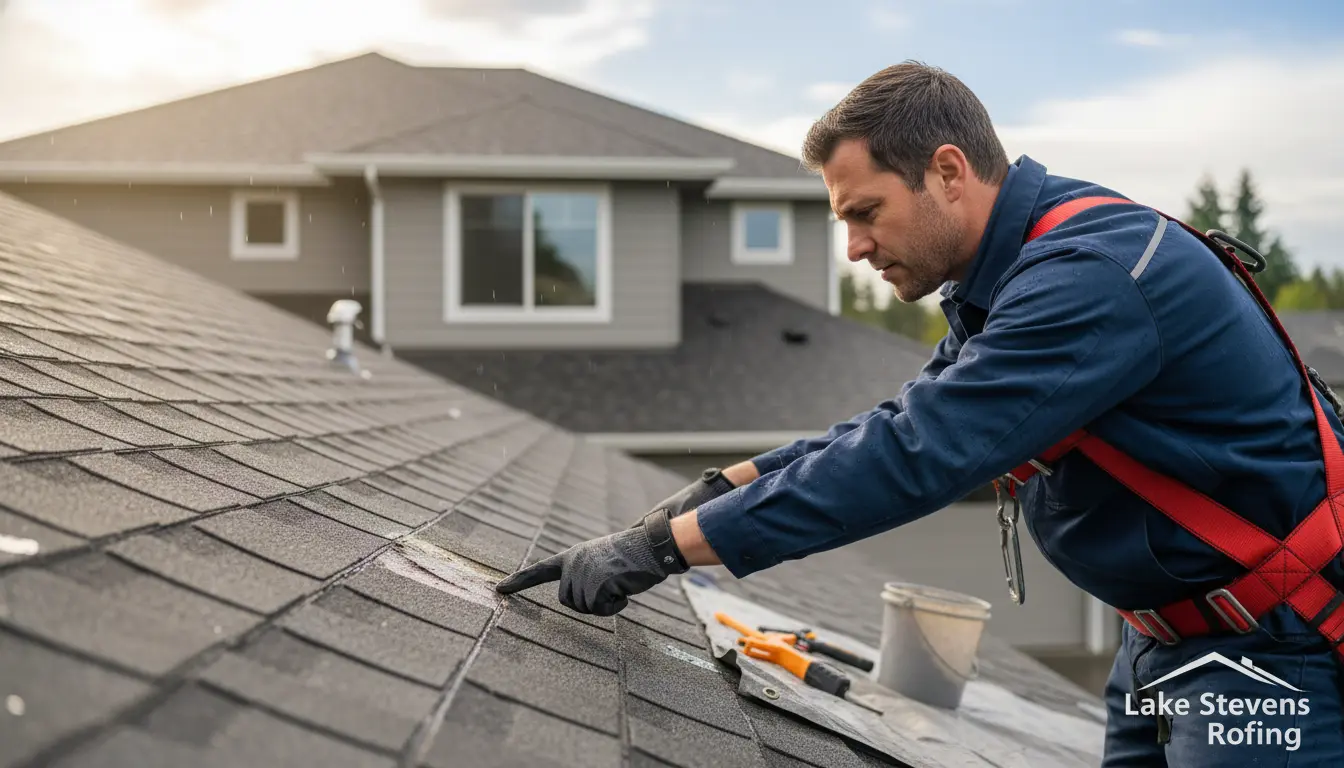
Climb onto your roof (or use binoculars from the ground for safety) to check for external damage. Missing, curled, or cracked shingles are prime suspects after heavy rain. Granules from asphalt shingles collecting in gutters signal wear.
Examine the soffits and fascias for rot or gaps—water often enters here. If you’re in the Clearview area, where trees are abundant, fallen branches might have punctured your roof, creating hidden entry points. Look for moss or algae buildup, common in our wet region, as it can lift shingles and invite leaks.
For a thorough check, consider scheduling a roof inspection with experts who know Lake Stevens’ unique challenges. Early detection can prevent small issues from becoming costly emergencies.
Practical Tips to Prevent Roof Leaks
Prevention is always better than cure, especially when it comes to your roof. With Lake Stevens’ frequent rains, proactive maintenance can extend your roof’s life by years. Here are actionable steps to keep leaks at bay.
Regular Maintenance Routines
Start with twice-yearly cleanings: clear gutters and downspouts of leaves and debris, which is vital in fall after our colorful foliage drops. Trim overhanging branches to reduce debris and wind damage—Lake Stevens’ wooded neighborhoods make this essential.
Apply sealants to cracks around vents and chimneys annually. For flat or low-slope roofs common in commercial buildings here, ensure proper drainage to avoid ponding water. Homeowners in Sultan might face similar issues with rural runoff, so adapting these tips locally helps.
Invest in high-quality materials during repairs. In our rainy climate, choosing algae-resistant shingles or metal roofing can provide long-term protection.
When to Call in Professionals
DIY has its limits— if you spot significant damage, don’t hesitate to contact pros. For instance, soffit and fascia repair is best left to experts to ensure proper sealing.
After heavy storms, opt for emergency roof services to tarp vulnerable areas and assess damage quickly. In areas like Monroe, where storms can be intense, timely intervention prevents further water intrusion.
Regular professional inspections, especially post-rain, can catch issues early. At Lake Stevens Roofing, we recommend annual checks for homes in Machias and surrounding spots to maintain peak condition.
Advanced Prevention Strategies for Lake Stevens Homes
Beyond basics, consider upgrading your roof for better resilience. Installing a roof replacement with impact-resistant materials can withstand heavy rain better. For commercial properties, explore commercial roofing services tailored to larger structures.
Ventilation improvements, like adding ridge vents, reduce moisture buildup. In South Lake Stevens, where homes are often nestled near water, enhanced underlayment layers provide extra barriers against leaks.
Stay informed about local weather patterns—apps can alert you to heavy rain, giving time for preemptive checks. Combining these with community resources, like those serving Clearview residents, ensures comprehensive protection.
FAQ: Roof Leaks After Heavy Rain
What should I do immediately if I spot a leak during rain?
Place buckets under drips to catch water and move furniture away. Avoid using the attic until inspected. Call Lake Stevens Roofing at (425) 873-8545 for urgent emergency roof services to prevent escalation.
How often should I inspect my roof in Lake Stevens?
At least twice a year, plus after major storms. Our wet climate demands vigilance—schedule a roof inspection with us for peace of mind.
Can I prevent leaks without replacing my entire roof?
Yes! Targeted repairs like sealing flashing or fixing shingles often suffice. For persistent issues in areas like Sultan, a full roof replacement might be needed.
Is moss on my roof causing leaks?
Absolutely—moss holds moisture and erodes shingles. Regular cleaning and treatments are key in rainy Lake Stevens.
How much does a professional roof inspection cost?
Costs vary, but early detection saves money long-term. Contact us at (425) 873-8545 for a quote tailored to your Monroe-area home.
Conclusion: Protect Your Lake Stevens Home Today
Heavy rain in Lake Stevens doesn’t have to mean roof disasters. By understanding causes, spotting signs early, and following preventive tips, you can keep your home safe and dry. Remember, our local weather demands proactive care—don’t wait for the next downpour to test your roof.
At Lake Stevens Roofing, we’re committed to serving the community with reliable, expert services. Whether you’re in South Lake Stevens or nearby Machias, reach out for a consultation. Call (425) 873-8545 today to schedule your inspection and ensure your roof stands strong against whatever the skies bring.